
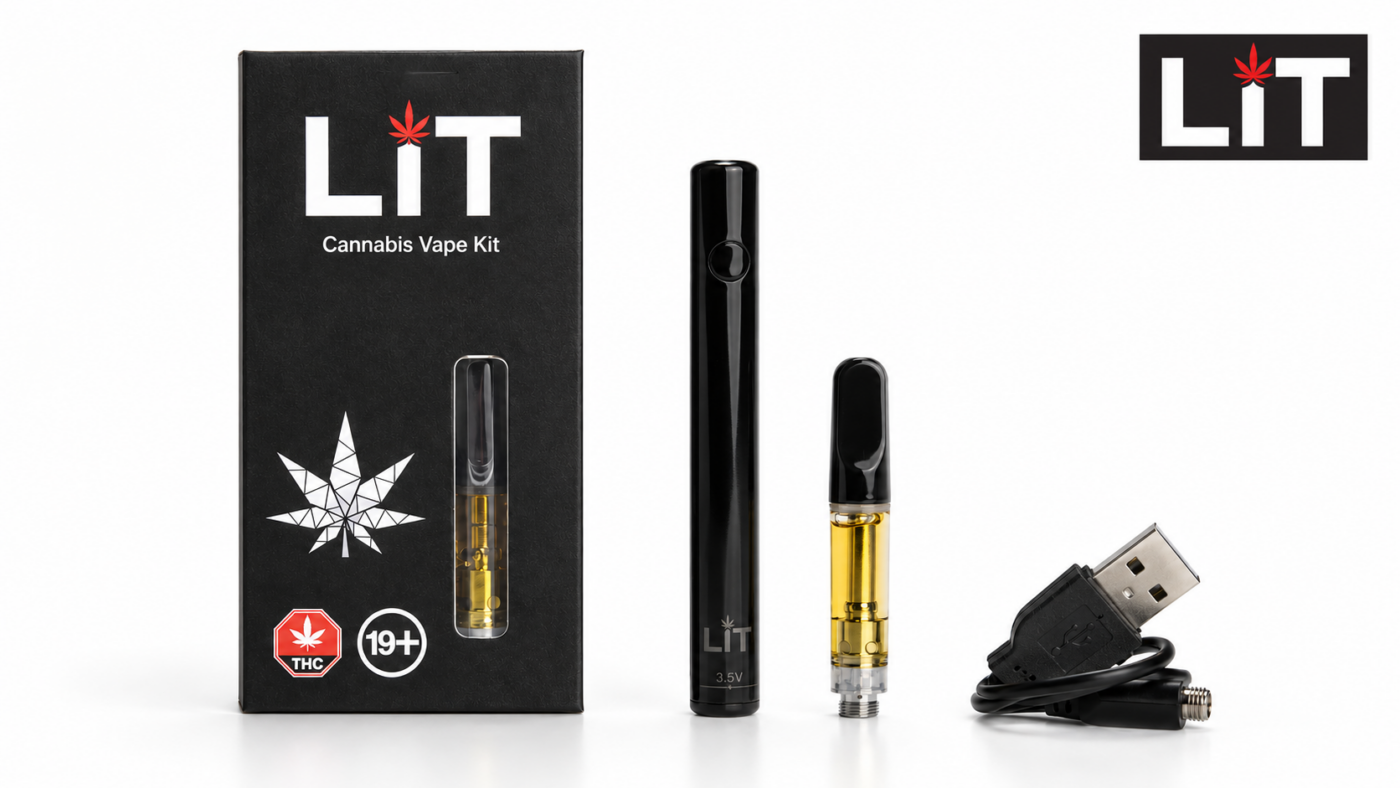
LiT refill cartridges use a 510-thread connection. If your battery is designed for standard 510-thread cartridges, that is the first compatibility check. It is not the only one: the cartridge must connect without force, have room for airflow, and be used within the battery and cartridge manufacturers’ instructions. A cartridge that screws on can still fail to work properly with a particular device.
Already own a battery? Look up its model and connector type before relying on the word “universal.” If you have a proprietary pod device, a disposable pen, or a device built for wax or dry flower rather than oil cartridges, do not assume it takes a 510-thread cartridge. LiT’s hardware FAQ lists 510-thread compatibility for its refills, but the battery’s manual is the place to confirm how your particular device works.
The quick compatibility checklist
| Check | What you need to confirm |
|---|---|
| Connector | Battery accepts a standard 510-thread oil cartridge, not a proprietary pod. |
| Physical fit | Cartridge screws on gently without cross-threading or being pressed against an enclosure. |
| Airflow | Device design does not block the cartridge’s airflow openings. |
| Operation | You know whether your battery is button-activated or draw-activated and how to charge it. |
| Settings | The device’s available settings and the cartridge instructions are compatible. |
| Condition | No visible damage, leaking, bent contact, frayed cable, or overheating. |
If any check fails, stop rather than forcing the cartridge onto the battery. The LiT refill-cartridge collection describes the products as 510-thread cartridges; it cannot certify every third-party device sold under a 510 label.
What is a 510-thread cartridge?
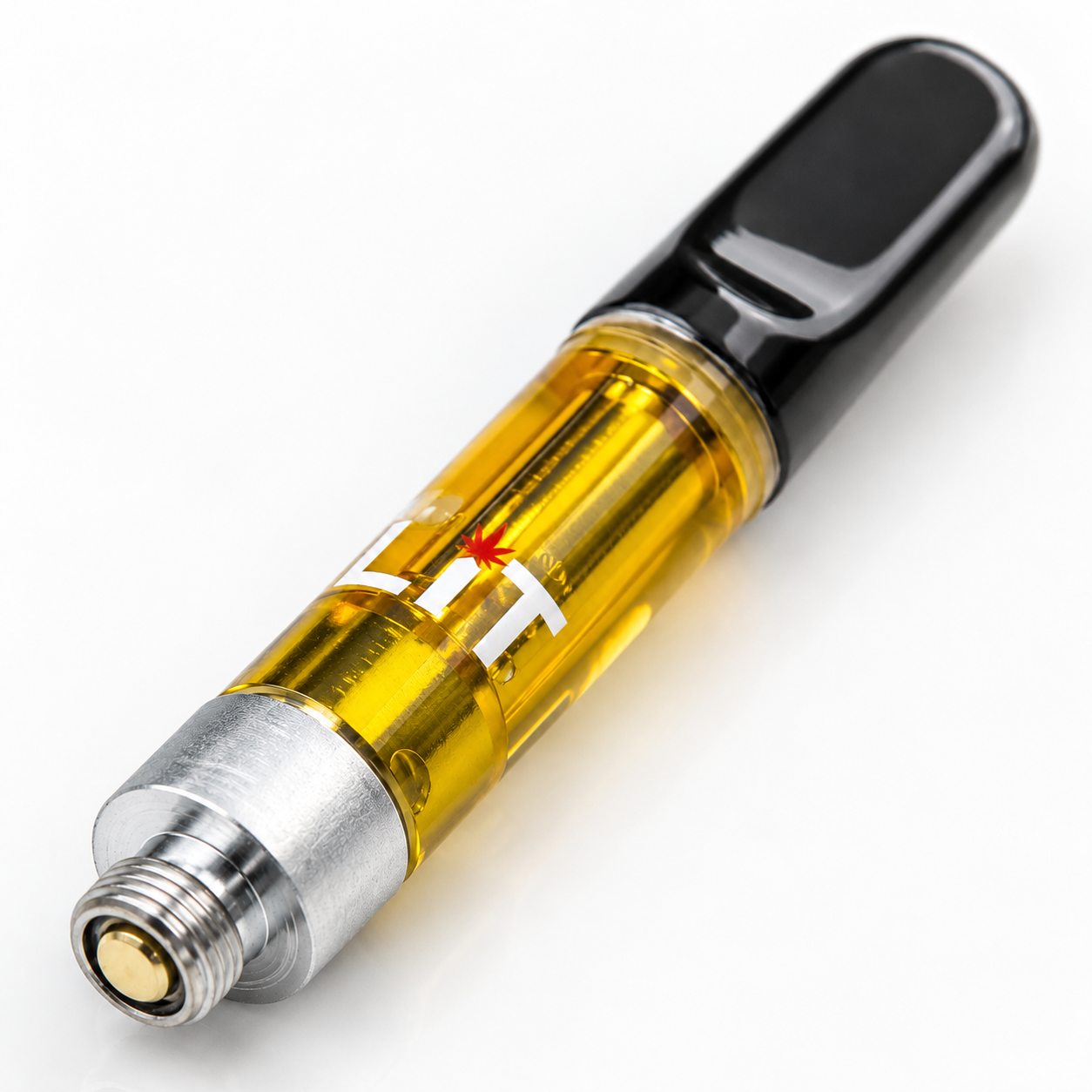
The name refers to a common threaded connection between a cartridge and a battery. On the LiT cartridge photo below, the threaded metal fitting is at the bottom, beneath the oil reservoir. The battery supplies electrical power; the cartridge contains the pre-filled oil and heating component. The mouthpiece is at the opposite end.
“Refill cartridge” in LiT’s catalogue means a pre-filled replacement cartridge for a reusable battery. It does not mean you should open the cartridge and refill it at home. Nor does “510” identify an oil formulation, THC strength, charging port, or ideal operating setting. Those are separate product specifications.
Will a LiT cartridge work with my existing battery?
It may work if your battery accepts standard 510-thread oil cartridges and its manufacturer permits that cartridge size and operating range. Start by locating the model name or manual. The phrase “vape pen” alone is not enough: it can describe a cannabis-oil battery, a nicotine device, a proprietary pod system, a disposable, or a device for other materials.
Some batteries have a recessed chamber or a narrow protective sleeve. The thread may match while a wider cartridge does not fit inside that housing, or the housing may interfere with airflow. Other batteries require a manufacturer-specified magnetic adapter; for example, CCELL’s Fino uses a magnetic adapter with a 510 cartridge. If yours uses an adapter, check its exact instructions and do not substitute a charger or connector merely because the metal ends look alike.
LiT currently describes both its 500mg cartridge and 1000mg cartridge as 510-thread compatible. Their oil sizes do not change the basic connector category. Compare the selected products’ actual specs and prices separately from the question of connector fit.
How to connect a cartridge without damaging it
- Check the cartridge and battery for damage or leaking before assembly. Do not use a damaged component.
- Confirm the battery is the intended 510-thread type and read its model-specific instructions.
- Hold the cartridge and battery straight. Let the threads catch naturally and turn the cartridge by hand until snug.
- Stop if it resists, tilts, or feels as though the threads are binding. Unscrew and check the fit rather than applying more force.
- Check that air can enter where the product design requires it. Follow the battery’s instructions for activation and settings.
Overtightening can make a good connector behave like a bad one and can make removal difficult. If a cartridge is stuck, leaking, or does not fit cleanly, contact the seller or device manufacturer instead of using pliers or trying to modify the threads.
Button-activated and draw-activated batteries are different
With a button-activated device, the manufacturer may require a specific press sequence to switch it on or change a setting. With a draw-activated device, inhaling initiates operation. Neither method can be inferred from the cartridge: activation is a feature of the battery.
The current LiT 1000mg starter-kit listing describes its included battery as draw-activated and includes a charger. An existing third-party battery may operate differently. Consult the instructions that came with your model; do not follow a button sequence from an unrelated pen. A disposable pen is a different format and does not accept a replacement cartridge just because it also produces vapour.
What about voltage or temperature settings?
Not every 510-thread battery lets you choose a voltage. Some have preset modes; others advertise variable settings; some give no useful number on the outside. A threaded fit does not establish that a particular setting is appropriate. Check the exact battery model, its current instructions, and the cartridge’s stated specifications.
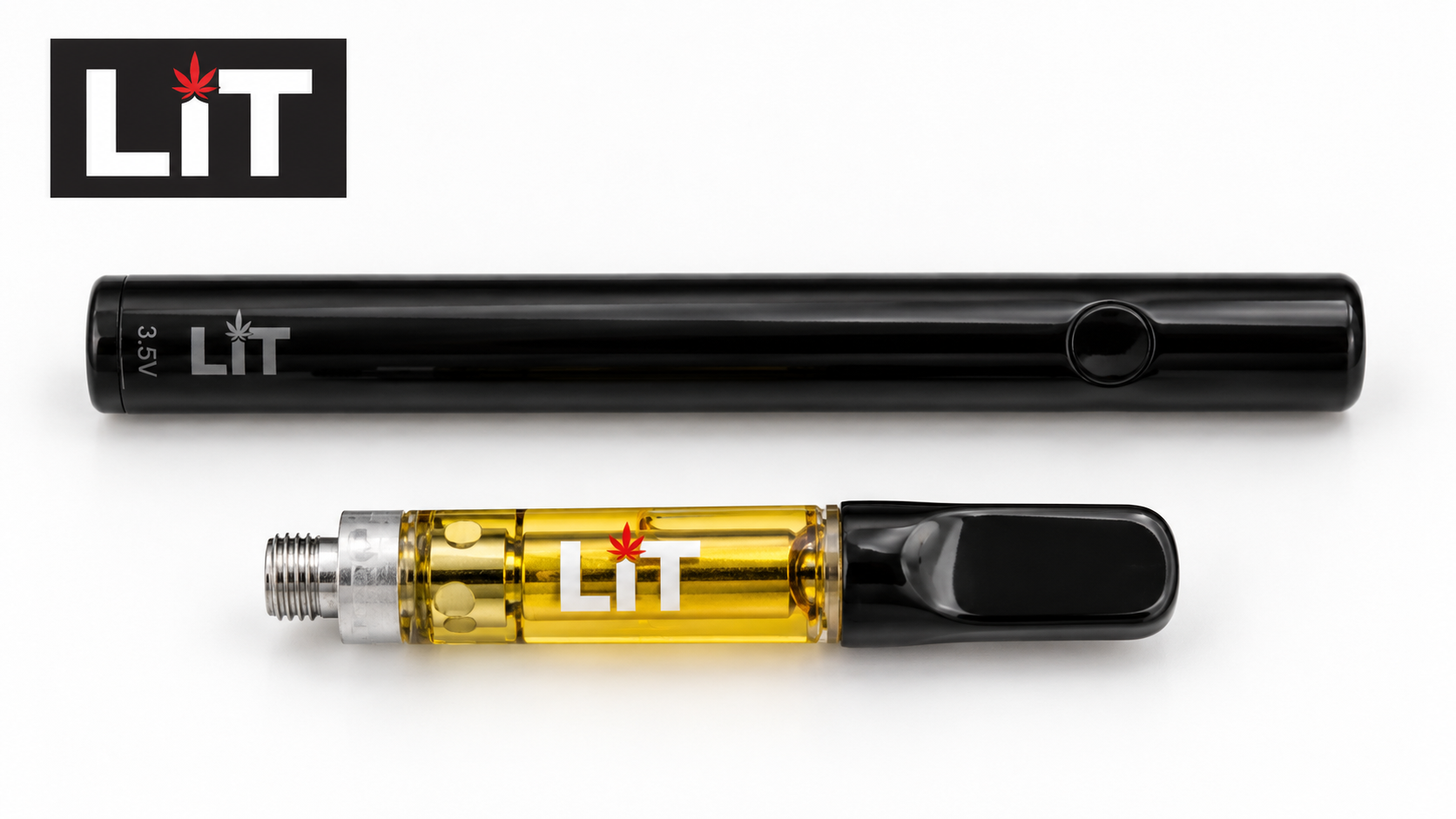
Higher output can change how a cartridge behaves and may produce a harsh or burnt taste. Do not keep raising a setting to make a non-working connection fire. A cart that is not drawing properly may have a connection, power, or airflow problem instead. LiT’s FAQ gives a recommended range, but the pictured LiT kit battery also carries a “3.5V” marking. The site owner should reconcile those two pieces of information for the specific hardware version before using one number as a universal instruction. Until then, the manufacturer’s instructions for your actual device take priority.
It screws on, but there is no vapour: what should I check?
Work through the basics in this order. First, make sure the battery is charged using its approved charger and is activated as its instructions require. Next, check that the cartridge is attached straight and only finger-tight. Check the battery’s own status light or error message, if it has one. Then look for an airflow opening blocked by the device housing.
If you have another known-compatible, undamaged cartridge or battery and the manufacturer allows it, comparing which component works can help identify the fault. Do not bridge electrical contacts with metal, pry out a centre pin, disassemble the battery, or use a leaking cartridge. If the battery becomes unusually hot, stop using and charging it. Health Canada’s hardware guidance notes that lithium-ion battery failures account for many vaping hardware incidents. LiT’s hardware FAQ provides its own first-line checks and a contact route for a defective item.
A cartridge can also have airflow trouble even when the battery powers it. That is a different problem from an incompatible thread. LiT has older articles on using its cartridges and unclogging a vape pen; review their advice against current hardware instructions before applying it to a specific product.
When a kit is simpler than matching third-party hardware
A kit supplies a battery, compatible cartridge, and charging equipment together. It can remove the uncertainty of identifying a battery you already own, though you should still read the supplied instructions. The LiT reusable-kit collection shows its current kit formats. Once you know the exact battery model, record its charging and cartridge requirements so later replacements are easier to check.
If you are choosing your first device rather than solving a connection problem, the first vape pen guide explains the format differences. The existing battery-life guide covers battery care, but model-specific charging directions should always come from the battery manufacturer.
Common 510-thread questions
Does a 510-thread cartridge fit every 510 battery?
No guarantee. The threads may match but the cartridge might not fit a recessed housing, get the intended airflow, or operate appropriately with a battery’s available settings. Check the complete device specification.
Can I use a LiT cartridge with a nicotine pod vape?
A proprietary pod device normally uses its own pods and is not a standard 510-thread oil-cartridge battery. Do not try to force a cartridge into a different device type.
Can I put a 1000mg cartridge on the same battery as a 500mg cartridge?
LiT lists both sizes as 510-thread cartridge formats. Check the physical clearance and instructions for your particular battery. “1000mg” describes the stated oil quantity, not a different charging connection.
Should I tighten the cartridge until it stops moving?
Attach it straight and finger-tight according to its instructions; do not apply force. If it binds or does not work, investigate the cause instead of overtightening.
The takeaway
Start with the connector: LiT refills are listed as 510-thread cartridges. Then check the rest of the system: cartridge clearance, airflow, activation, approved settings, charging, and the condition of both components. When the model is unknown or something does not fit smoothly, get the device instructions or contact the manufacturer before trying again.