
Why No Fillers Matters: What’s Actually in Your Vape Pen Oil
When you buy a cannabis vape cartridge in Canada, you are buying a pre-filled container of oil. What is in that oil matters significantly more than most buyers realize, because the label rarely tells the full story. This page explains the four most common vape oil additives, why brands use them, what the research says about inhaling them, and why LiT made the decision to never use any of them.
Why Brands Add Things to Cannabis Oil
Pure CO2-extracted cannabis oil is thick. Too thick, in most cases, to flow properly through a vape cartridge at room temperature and too thick to produce the consistent vapour cloud that users expect. Brands face a choice: either use botanical terpenes (which occur naturally in cannabis) to achieve the right viscosity at premium cost, or use cheaper thinning agents to solve the problem more economically.
Most brands choose the cheaper option. The thinning agents they use are widely available, food-safe when ingested, and effective at solving the viscosity problem. The issue is that “food-safe when eaten” and “safe when inhaled repeatedly over months or years” are not the same thing. The lungs are not the digestive tract. Compounds that the body handles safely through digestion can cause real harm when deposited directly into lung tissue through repeated inhalation.
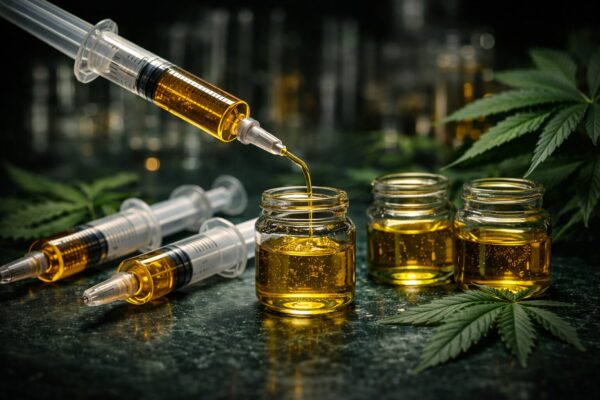
The Four Common Additives , and the Problem with Each
MCT Oil (Medium-Chain Triglycerides)
MCT oil is a coconut-derived carrier oil widely used in health supplements and cooking. It is completely safe to eat. When inhaled, it is a different matter. Oil droplets deposited in lung tissue can cause a condition called lipoid pneumonia , an inflammatory lung condition caused by the accumulation of lipid (fat) particles in lung tissue. The symptoms include cough, shortness of breath, and chest pain. Chronic or heavy vape users who use MCT-cut cartridges face the greatest risk.
MCT oil is one of the most commonly used cannabis vape additives in the Canadian grey market because it is inexpensive, odourless, and effective at thinning oil to the right consistency. Its presence in a cartridge is almost never disclosed on the label.
Propylene Glycol (PG)
Propylene glycol is a synthetic organic compound used in nicotine vape juice, food additives, and pharmaceutical products. When ingested, it is considered generally safe. When heated to vaping temperatures, PG breaks down and produces formaldehyde and acetaldehyde , both known carcinogens. The concentration of these byproducts increases with temperature and frequency of use.
PG is borrowed from the nicotine vaping industry, where it was never designed for use in cannabis oil. Its adoption in cannabis cartridges was driven by availability and cost, not by safety evidence for this specific use case.
Vegetable Glycerin (VG)
Vegetable glycerin is a natural compound derived from plant oils, also widely used in nicotine vaping as a cloud-producing agent. Like PG, it is food-safe and produces formaldehyde when heated. At typical vaping temperatures VG also produces acrolein , an irritant compound associated with respiratory inflammation and long-term lung damage in animal studies.
VG produces visible, dense vapour clouds which many users associate with quality. This creates a perverse incentive: brands can add VG to produce impressive-looking clouds while introducing a compound associated with lung irritation. Thick clouds are not an indicator of clean oil.
Vitamin E Acetate
This is the most serious of the four. Vitamin E acetate , a synthetic form of Vitamin E used as a supplement thickener , was identified as the primary cause of the 2019 EVALI outbreak in the United States. EVALI (E-cigarette or Vaping product use-Associated Lung Injury) was responsible for over 2,800 hospitalizations and 68 confirmed deaths in the US between 2019 and 2020. The CDC identified Vitamin E acetate as the primary culprit in the majority of cases.
When inhaled, Vitamin E acetate interferes with normal lung function at the cellular level. It coats lung tissue in a way that disrupts the surfactant layer that keeps the lungs functioning properly. The onset of EVALI symptoms can occur weeks or months after use, making it difficult for users to connect their symptoms to a specific product.
Despite the EVALI outbreak and the clear evidence linking Vitamin E acetate to serious lung injury, some brands in the grey market cannabis space continue to use it because it is cheap and effective at increasing the apparent volume of oil in a cartridge. There is no public registry of which Canadian grey market products contain it.
LiT’s Position: Zero Fillers, Ever
LiT has never used MCT oil, propylene glycol, vegetable glycerin, or Vitamin E acetate in any product, at any point in the company’s history since 2019. This is not a recent policy change made in response to market pressure. It was a founding decision made before the first product was released.
The viscosity challenge that leads other brands to use these additives is solved at LiT using botanical food-grade terpenes , the same terpene compounds that occur naturally in the cannabis plant. This approach costs more and requires more careful formulation, but it means the oil in a LiT cartridge contains cannabis oil and naturally occurring terpenes, and nothing else.
Our extraction process is equally important. CO2 extraction produces cleaner oil than solvent methods, preserves more of the natural terpene profile, and leaves no chemical residue in the finished product. You can read more about why this matters on our CO2 extraction page.
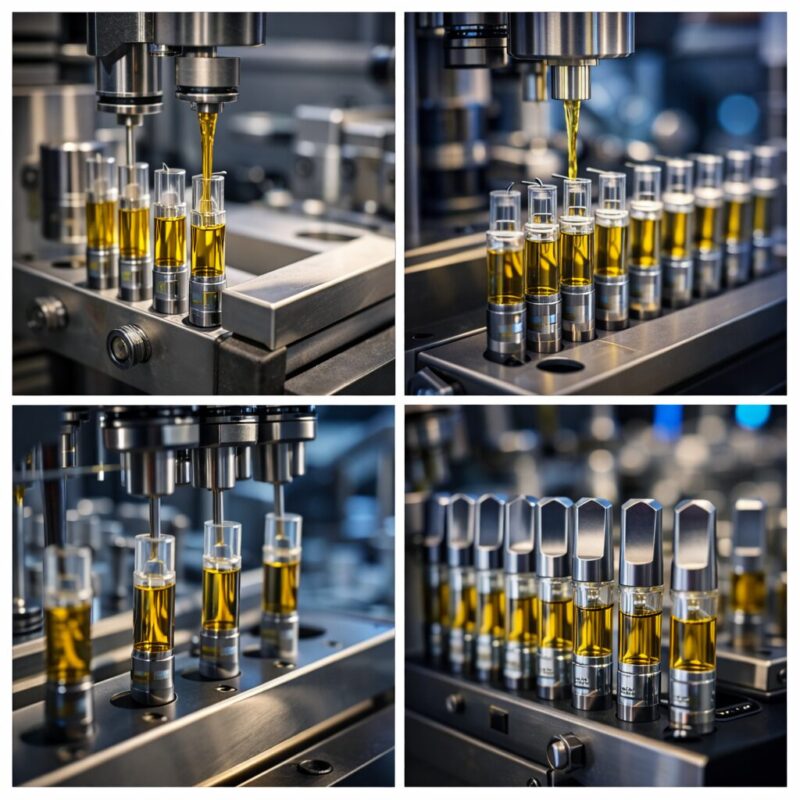
How to Check What Is in Your Cartridge
The grey market cannabis space in Canada is largely self-regulated. There is no mandatory ingredient disclosure requirement equivalent to what applies to food products. This means the burden of verification falls on the buyer.
When evaluating any cannabis vape brand, look for three things:
First, does the brand explicitly name what is NOT in their oil? A brand that uses clean ingredients will say so specifically. “No MCT oil, no PG, no VG, no Vitamin E acetate” is a verifiable claim. “Pure cannabis oil” is not , it says nothing about what else might be present.
Second, does the brand disclose their extraction method? CO2 extraction is the cleanest available method. Solvent extraction is cheaper and more common. If a brand does not name their process, assume it is solvent-based.
Third, do they publish third-party lab results? Lab testing should include cannabinoid potency, residual solvents, heavy metals, and pesticides. Any brand confident in their product’s cleanliness should make these results available.
What This Means for Your Health
We are not claiming that LiT cartridges carry zero health risk. Cannabis vaping, like all inhalation of non-air substances, carries some degree of risk. What we are claiming is that the specific risks associated with MCT lipoid pneumonia, PG and VG aldehyde byproducts, and Vitamin E acetate lung injury are completely eliminated from our products because those compounds are not present.
For regular cannabis vape users who use their pen daily or near-daily over months and years, the cumulative difference between inhaling clean oil and oil containing these additives is not trivial. It is a meaningful ongoing health consideration that most brands give no thought to.
Shop Clean
Every LiT product , from our THC refill cartridges at $29 for 500mg to our complete starter kits from $39 , uses CO2-extracted cannabis oil with botanical terpenes and zero additives. 30+ strains. Free shipping on orders $149+. Discreet plain packaging on every order. Ships coast to coast. Must be 19+ to purchase.
Browse our full product catalogue or go straight to the most popular strain to start.